How to Read Tarot Cards: A Beginner's Guide
Tarot isn't fortune-telling. It's pattern recognition. The cards don't predict your future—they reflect the energy you're carrying right now and show you where it's likely to lead if nothing changes.
Learning to read tarot is less about memorizing 78 card meanings and more about learning to trust what you see, feel, and know before your logical mind catches up.
Why Tarot Works: Images Speak to Ancient Brain Structures
Before we talk about spreads or shuffling techniques, you need to understand why staring at illustrated cards can reveal anything meaningful at all.
Your brain processes images differently than words. Language lives in the neocortex—the newest, most recently evolved part of your brain that handles logic, analysis, and linear thinking. But images bypass all of that and speak directly to older, faster processing systems.
The limbic system recognizes emotional patterns instantly. When you look at the Three of Swords—three blades piercing a heart against a stormy sky—you don't need to think "heartbreak." You feel it. Your nervous system responds to the image before your conscious mind has labeled anything.
The reptilian brain, the most ancient part of our neural architecture, holds survival instincts and pattern recognition that kept our ancestors alive long before language existed. When you see The Tower—figures falling from a crumbling structure struck by lightning—something primal registers danger, upheaval, sudden collapse. This isn't learned. This is encoded.
Carl Jung called these universal image-patterns "archetypes"—recurring symbols that appear across all human cultures because they reflect fundamental patterns of human experience. The Mother. The Hero. The Trickster. The Wise Elder. These aren't just characters in stories; they're structural patterns in human consciousness itself.
Tarot cards are deliberately designed to activate this deeper, pre-verbal knowing. When you read tarot, you're not translating symbols into meanings like decoding a foreign language. You're allowing images to trigger emotional, intuitive, and instinctual responses that your conscious mind then interprets into language.
This is why your first impression of a card is often more accurate than the interpretation you arrive at after ten minutes of overthinking. The gut-level response is the reading. Everything else is just your logical mind trying to catch up and make it acceptable to your rational self.
The Three Components of a Tarot Reading
Every tarot reading has three essential elements: the question, the cards, and the interpretation. Miss any one of these and you're just shuffling pretty pictures.
The Question: What You're Really Asking
Weak questions get weak answers. "Will I get the job?" is a yes/no question that tarot can't definitively answer because the future isn't fixed—it's probability-weighted based on current energy.
Strong questions explore energy, pattern, and potential: "What energy should I bring to the job interview?" or "What's blocking me from career advancement?" or "What lesson is this job search trying to teach me?"
Notice the difference. Weak questions ask tarot to be a magic 8-ball. Strong questions ask tarot to be a mirror.
Good tarot questions typically:
- Focus on you, not other people ("What do I need to know about this relationship?" not "Does he love me?")
- Explore process rather than outcome ("How can I approach this?" not "Will this work?")
- Seek understanding, not permission ("What's the hidden dynamic here?" not "Should I do this?")
- Leave room for complexity (tarot doesn't do simple yes/no well, but it excels at revealing layers)
Before you touch your deck, get clear on what you're actually asking. Write it down if it helps. The quality of your question determines the quality of your reading.
Creating Space: The Practical Logistics
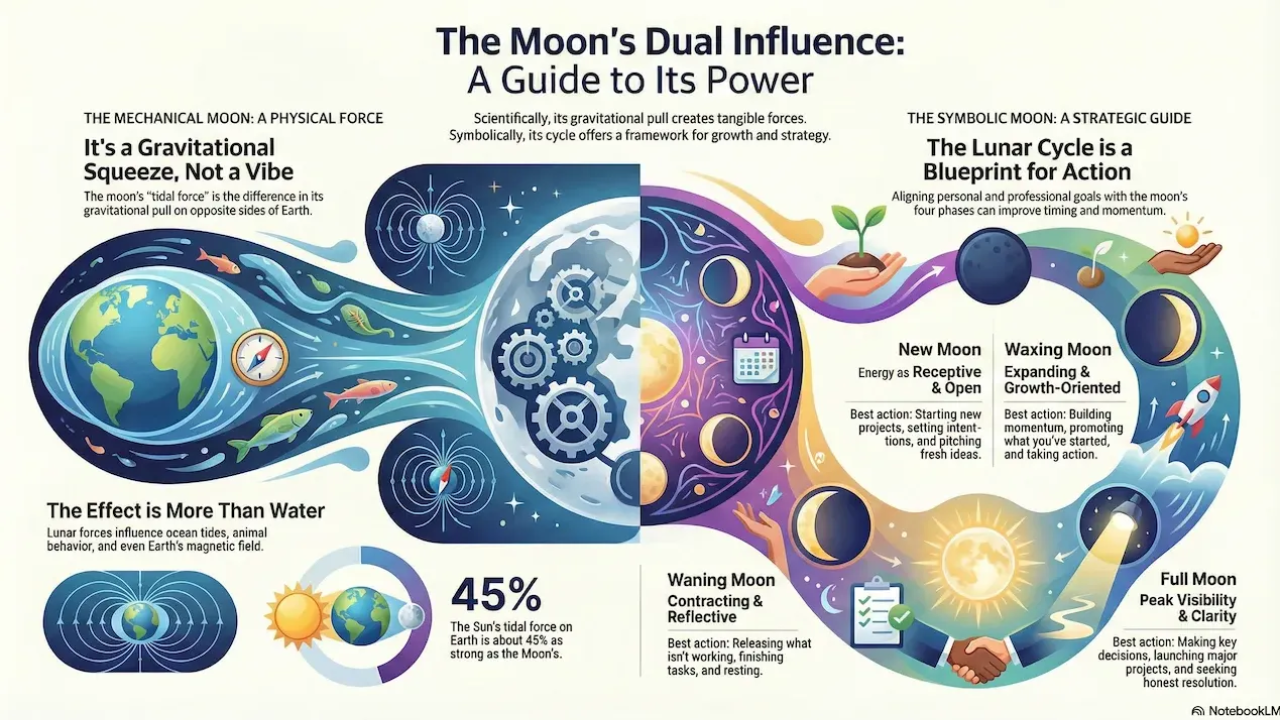
You don't need a velvet cloth, specific crystals, or a full moon to read tarot. But you do need some version of intentional space—even if that's just silencing your phone and closing the door.
Tarot works best when you're not distracted, rushed, or performing for an audience. This isn't about being "spiritual." It's about signal clarity. If your mind is cluttered with your to-do list or your roommate is asking you questions, you can't hear the quiet intuitive voice that tarot activates.
Some practical considerations:
Physical space: Somewhere you can lay out cards without pets walking on them or coffee spilling. A table works. So does a cleared spot on your bed or floor.
Mental space: A few deep breaths to settle your nervous system. You're not meditating yourself into an altered state—you're just downshifting from beta brain waves (active thinking) to alpha (relaxed awareness).
Deck preparation: Some people shuffle extensively; others just cut the deck. There's no magical right way. The point is to interact with the cards physically while holding your question in mind. Your hands know what to do.
When to stop shuffling: When it feels done. Sometimes a card will literally jump out. Sometimes you'll feel a subtle shift from "still mixing" to "ready now." Trust that instinct.
The Mechanics: How to Actually Draw and Lay Out Cards
The simplest reading is a one-card pull: shuffle while holding your question, stop when ready, draw the top card, and let it speak.
The most useful beginner spread is the three-card layout. After shuffling, draw three cards and lay them out left to right:
Position 1: Past/Foundation - What led to this moment? What energy are you carrying forward?
Position 2: Present/Challenge - What's happening right now? What needs attention?
Position 3: Future/Outcome - Where is this heading if current patterns continue?
You can also read these positions as Situation / Action / Outcome or Mind / Body / Spirit or You / Them / Relationship. The three-card structure is flexible—it's the triangle shape itself (thesis, antithesis, synthesis) that creates meaning.
Draw your cards face-down, then flip them one at a time. Give yourself a moment with each card before moving to the next. Don't rush to "figure out" the spread. Let the images accumulate in your awareness.
How to Read the Cards: From Image to Insight
Here's where most beginners panic and reach for a guidebook. Don't. Not yet.
Step 1: Look at the card without trying to interpret it.
What's literally in the image? Colors, figures, objects, symbols, landscapes, weather, body language, facial expressions. Describe what you see like you're talking to someone who can't see the card.
Example: The Five of Cups shows a cloaked figure facing three spilled cups while two full cups stand behind them. There's a bridge in the distance leading to a structure—maybe a home or castle. The sky is gray.
Step 2: Notice your emotional response.
How does this image make you feel? Not what you think it means—what does it evoke? Sadness? Regret? Loneliness? Stubborn fixation? That gut-level feeling is part of the message.
The Five of Cups might make you feel the weight of loss, or frustration at someone who won't turn around and see what's still available to them.
Step 3: Connect it to your question.
Now bring your question back into focus. If you asked "What's blocking me from moving forward in my career?" and pulled the Five of Cups, what clicks?
Maybe you're so focused on past failures (the spilled cups) that you can't see current opportunities (the two full cups behind you). Maybe you're grieving something that didn't work out and that grief has become an identity. Maybe it's time to turn around and walk toward that bridge.
You didn't need a book to tell you that. The image told you directly.
Step 4: Consider the position.
If this card is in the "past" position, it's showing you what you're carrying forward. If it's in the "future" position, it's warning where you're headed if nothing changes—not a fixed fate, but a probable trajectory.
Context matters. The Five of Cups in "past" suggests you've already been through the loss; in "future" it suggests you're at risk of creating more loss through your current mindset.
Step 5: Weave the cards into a story.
If you're reading a three-card spread, don't interpret each card in isolation. They're in conversation.
Example spread for "What do I need to know about this creative project?":
- Past/Foundation: Eight of Pentacles (figure diligently crafting coins)
- Present/Challenge: Five of Cups (grief over spilled cups, two remain)
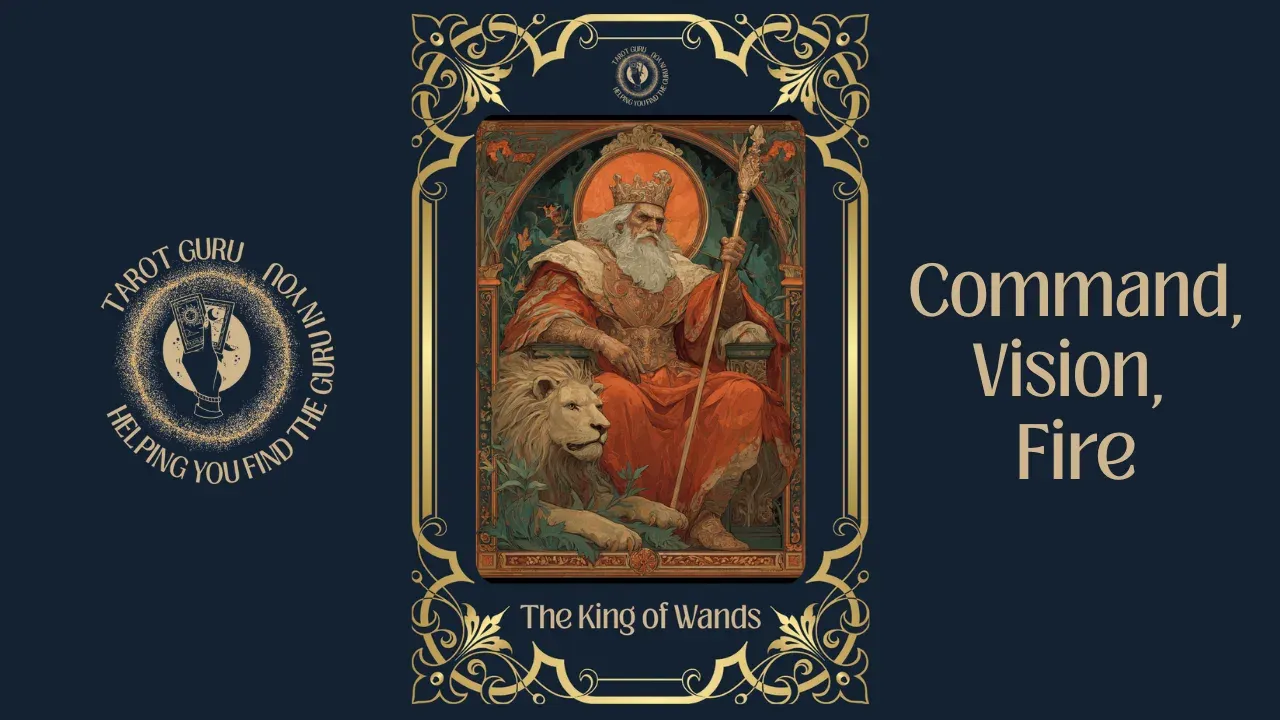
- Future/Outcome: Knight of Wands (figure on horseback holding a wand, ready to charge forward)
The story: You've put in serious work (Eight of Pentacles), but something didn't go as planned and now you're stuck in disappointment (Five of Cups). However, if you can turn around and see what's still valuable in what you've built, you'll find renewed creative fire (Knight of Wands) and momentum.
See how the cards talk to each other? That's the reading.
When to Use Card Meanings (And When to Ignore Them)
At some point you'll want to learn traditional card meanings—not because they're "right" but because they're a shared symbolic language developed over centuries of practice. They offer additional layers.
But here's the thing: if the traditional meaning contradicts what you're seeing and feeling, trust yourself.
Maybe the guidebook says the Three of Swords means "heartbreak and betrayal" but when you look at it in your reading, you see necessary clarity—the kind of painful truth that cuts through illusion and sets you free. That's a valid reading.
Tarot isn't a fixed code to crack. It's a symbolic vocabulary, and like any language, it has room for dialect, nuance, and personal fluency.
Start with the image. Let it speak to your older, wiser brain structures. Then, if you want to check what the traditional interpretation adds, go ahead. But never let the book override what you know.
A Real Three-Card Reading Example
Let's walk through an actual reading so you can see how this works in practice.
Question: "What do I need to understand about my resistance to starting this new project?"
Cards drawn:
- Past/Foundation: The Hermit (robed figure alone on a mountaintop, holding a lantern)
- Present/Challenge: Two of Swords (blindfolded figure holding two crossed swords)
- Future/Potential: Ace of Wands (hand emerging from clouds holding a flowering wand)
The reading:
The Hermit in the past position - You've spent time in solitude, reflection, maybe isolation. You've done deep internal work. You've been the person on the mountain, holding your own light, figuring things out alone. This isn't bad—this is wisdom-gathering. But it's also become a pattern.
Emotionally, The Hermit feels like safety in solitude. Comfort in being the wise observer rather than the active participant.
Two of Swords in the present - Right now you're stuck in a mental stalemate. The blindfold suggests you're refusing to see something, or pretending you don't know what you actually know. The crossed swords create a perfect barrier—nothing gets in, nothing gets out.
Your resistance to starting the project isn't lack of clarity. It's too much clarity about what starting will require, so you're choosing paralysis instead of decision.
Ace of Wands in the future - If you remove the blindfold and make a choice, pure creative energy is available. The Ace of Wands is the spark, the beginning, the "yes" that unlocks momentum. It's right there waiting—not someday, not when you're ready, but right now if you'll reach for it.
The story: You've been in hermit mode (necessary, valuable), but now that retreat has become avoidance. You're pretending you don't know what to do next (Two of Swords) when actually you know exactly what to do—and that's precisely what scares you. The creative fire (Ace of Wands) is available the moment you stop the mental stalemate and act.
Notice: I didn't use a single technical tarot term. I looked at images, felt emotional responses, connected to the question, and wove a coherent narrative. That's tarot reading.
Common Beginner Mistakes (And How to Avoid Them)
Overthinking every card. Your first impression is usually right. The more you intellectually pick apart an image, the further you get from the intuitive hit. Notice what you see and feel in the first 10 seconds, then trust that.
Trying to force yes/no answers. Tarot doesn't work like a coin flip. If you need a binary answer ("Should I take this job?"), flip a coin and notice how you feel about the result. That feeling is your answer. Don't torture the cards into giving you permission.
Reading for other people too soon. Start with yourself. Get fluent in your own patterns, blocks, and growth edges before trying to navigate someone else's psyche. Reading for others requires boundaries, discernment, and the ability to deliver difficult information with care—skills that develop with practice.
Collecting decks instead of practicing. You don't need seven decks. You need repetition with one. The Rider-Waite-Smith structure is standard for a reason—learn it deeply before branching into abstract or themed decks.
Looking up every card before trusting yourself. Put the guidebook down for your first few dozen readings. Let your visual, emotional, instinctual brain do the work it's designed to do. Books are for deepening understanding, not replacing intuition.
Practice Builds Fluency
You won't be good at this immediately. That's fine. Tarot is a skill that develops through repetition, like learning to read facial expressions or sense the mood in a room.
Start with one card a day. Pull a card in the morning, look at it, notice what it evokes, then go about your day. At night, journal about whether the card's energy showed up in your experience. This builds the feedback loop between image, intuition, and real-world pattern.
Then move to three-card spreads for questions you actually care about—not hypothetical practice questions, but real stakes. "What do I need to know about this job interview?" or "What's the hidden dynamic in this friendship?" or "What's blocking my creative flow?"
Over time, the cards stop feeling random and start feeling like a language you speak. You'll recognize recurring themes. You'll notice when certain cards appear in certain positions. You'll develop your own relationship with the images.
Tarot doesn't require psychic ability. It requires attention, honesty, and the willingness to see what's actually there instead of what you wish was there.
The cards are just mirrors. But if you're brave enough to really look, they'll show you everything you need to see.
Ready to Go Deeper?
From beginner-friendly courses to hand-illustrated tarot decks — everything you need to build real confidence with the cards, in one place.