The Lovers: When You Stop Abandoning Yourself
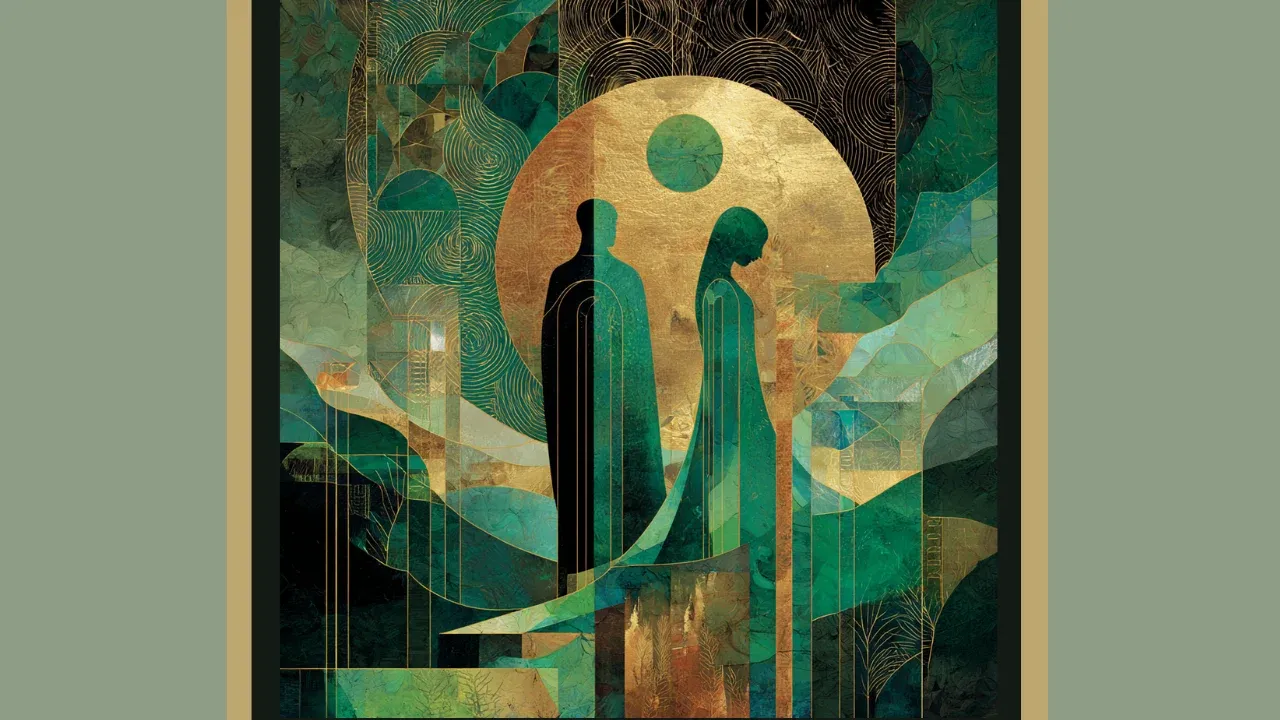
You keep bending. Adjusting. Becoming whoever they need you to be. You've gotten so good at reading the room, anticipating their mood, editing your words before they leave your mouth. And somewhere in all that shapeshifting, you lost track of who you actually are. The Lovers card isn't here to ask if they love you. It's here to ask if you love yourself enough to stop disappearing.
What The Lovers Really Means
In the Rider-Waite-Smith deck, two naked figures stand beneath an angel—vulnerable, exposed, witnessed. Most people see this as a romance card. It's not. It's a card about choice, values, and whether you're living in alignment with your own truth.
The angel above represents divine guidance—not someone else's expectations, but your own inner knowing. The two figures aren't choosing each other. They're each making a choice about how they'll show up: authentic or performed, whole or fractured, honest or people-pleasing.
The Tree of Knowledge stands behind one figure, the Tree of Life behind the other. This is the choice between awakening (painful truth) and staying asleep (comfortable lies). Between honoring yourself and betraying yourself to keep the peace.
The Lovers appears when you're at a crossroads. Not "should I date this person?" but "should I keep abandoning who I am to make this work?" It's the moment you realize that contorting yourself into someone else's ideal is not love—it's self-erasure.
Want the traditional symbolism and full card meanings? See our The Lovers tarot card meaning.
Why You're Feeling Split in Two
Because you are. You're living as two people: the version of you that exists in the relationship, and the version that exists when no one's watching.
When The Lovers shows up, you're usually exhausted from the performance. You've been managing someone else's emotions, walking on eggshells, swallowing your needs, making yourself convenient. And part of you knows this isn't sustainable—but another part is terrified of what happens if you stop.
Psychologically, this is called "self-silencing"—suppressing your authentic thoughts, feelings, and needs to avoid conflict or rejection. Research shows it's correlated with depression, anxiety, and loss of self-concept. You can't betray yourself repeatedly without consequences.
Your body knows before your brain does. The tightness in your chest when you agree to something you don't want. The exhaustion that feels bone-deep. The vague sense that you're living someone else's life. That's not anxiety—that's your system trying to tell you something's wrong.
The Lovers validates what you've been afraid to admit: you've been choosing them over you. And it's killing something essential inside you.
If you're also pulling Death right now, you might want to read about the change you never wanted—because choosing yourself often means ending the version of the relationship you've been clinging to.
What The Lovers Wants You to Know
Here's the truth this card brings: you can't love someone into loving the real you. If you have to hide, shrink, or edit yourself to be acceptable, that's not intimacy—that's a hostage situation.
The Lovers knows you're scared. You think if you stop accommodating, they'll leave. And maybe they will. But here's the harder question: if they only love the version of you that never needs anything, never disagrees, never takes up space—do they actually love you?
This card wants you to understand that self-abandonment doesn't create closeness. It creates resentment. You resent them for not seeing you. They resent you for not being honest. Everyone's performing, no one's connecting, and the relationship slowly dies from lack of truth.
The angel in the card is witnessing you—not judging, just seeing. It's asking: who are you when no one's asking you to be different? That's the person you need to bring back. Not the polished, accommodating version. The messy, opinionated, needs-having version.
Choosing yourself isn't selfish. It's the only way to build a relationship that doesn't require you to disappear.
Beyond the Cards: What You Can Do Right Now
Tarot can name the problem, but you have to do the work of reclaiming yourself. Here's where to start:
Notice when you're self-abandoning. Start tracking the moments you edit yourself. When you say "I'm fine" but you're not. When you agree to plans you don't want. When you laugh at something that's not funny. When you apologize for having feelings. Write them down. The pattern will become obvious.
Get support. Self-abandonment is a learned behavior, often from childhood. Therapy can help you understand where it started and how to stop:
- Psychology Today Therapist Finder (psychologytoday.com) lets you filter for therapists who specialize in codependency, boundaries, and relationship patterns
- BetterHelp or Talkspace offer online therapy if you need support but can't access in-person options
- Codependents Anonymous (coda.org) has free meetings for people who habitually put others' needs before their own
If you're in crisis or having thoughts of self-harm: Call 988 (Suicide & Crisis Lifeline) or text HOME to 741741 (Crisis Text Line). Realizing you've lost yourself can trigger deep despair. You don't have to face that alone.
Practice small acts of self-honoring. You don't have to blow up your life today. Start tiny: order what you actually want at the restaurant. Say no to one thing you don't want to do. Express one real feeling. Choosing yourself is a muscle—you have to build it incrementally.
Ask better questions. Stop asking "how do I make them happy?" Start asking "what do I actually want?" and "am I honoring that?" The answers will feel unfamiliar at first. That's because you've been ignoring them.
Set one boundary. Just one. It will feel terrifying and possibly selfish. Do it anyway. Notice what happens. Often, the catastrophe you're imagining doesn't occur. And if it does—if they can't handle you having a single boundary—that's crucial information about the relationship.
If you're realizing the relationship can't survive your authenticity, our article on rebuilding hope after heartbreak might help you think about what comes next.
Using Tarot as Part of Your Healing Practice
The Lovers can become a daily check-in card: Did I honor myself today, or did I abandon myself? Pull it when you need permission to choose you. Ask it: What am I avoiding saying? or Where am I pretending to be smaller than I am?
If you're ready to do deeper work on becoming the kind of person who doesn't self-abandon—the kind of person who attracts relationships based on authenticity rather than performance—our Tarot for Love Mastery course walks you through becoming the lover you're trying to attract. It's not about manipulation or "rules"—it's about reclaiming your wholeness so you stop settling for crumbs.
Journal with this card. Write about the last time you chose someone else over yourself. Write about what you're afraid will happen if you stop. Write about who you'd be if you didn't have to manage anyone else's feelings. The Lovers doesn't rush you toward change—it just asks you to stop lying to yourself about what's happening.
You can also work with The Lovers as part of the Major Arcana journey in our Tarot Treasury, where you'll find resources for every card's emotional and spiritual lessons.
Books That Help When Tarot Isn't Enough
These books understand the cost of self-abandonment and the work of coming back to yourself:
Core reads for reclaiming yourself:
- Self-Compassion by Kristin Neff
- When Things Fall Apart by Pema Chödrön
- The Body Keeps the Score by Bessel van der Kolk
- Maybe You Should Talk to Someone by Lori Gottlieb
For tarot readers:
- Seventy-Eight Degrees of Wisdom by Rachel Pollack
- Tarot for Change by Jessica Dore
Specifically on relationships and self-abandonment:
- Attached by Amir Levine and Rachel Heller
- Codependent No More by Melody Beattie
[These are affiliate links through Bookshop.org—purchases support independent bookstores and help us keep creating free resources like this article.]
This card brings the hardest truth: you can't build real intimacy on a foundation of self-betrayal. The choice isn't between you and them—it's between the real you and the performed you. Choose yourself. Let it guide your next reading—and your next honest conversation.
Ready to Go Deeper?
From beginner-friendly courses to hand-illustrated tarot decks — everything you need to build real confidence with the cards, in one place.